Introducing Unified Mapping v2: One Record, Every Source for Humans and Agents
If you're running legacy marketing automation like Marketo, you already know this problem. Data for a field can come from more than one place, and when two systems disagree, something has to win.
Today Inflection is rolling out Unified Mapping v2, a more powerful version of “sync preference.” Every field, on every entity, shows exactly which sources feed it, in what order, and what happens when they conflict.
One record, multiple sources
Contact, Account, Product User, and Organization objects can pull from three kinds of places can pull from three kinds of places: Salesforce, your data warehouse, and product data (eg Segment and Amplitude). Inflection resolves all of it into a single unified record per person and per account, the same record that powers your dynamic lists, journeys, tokens, and personalization everywhere in the platform.
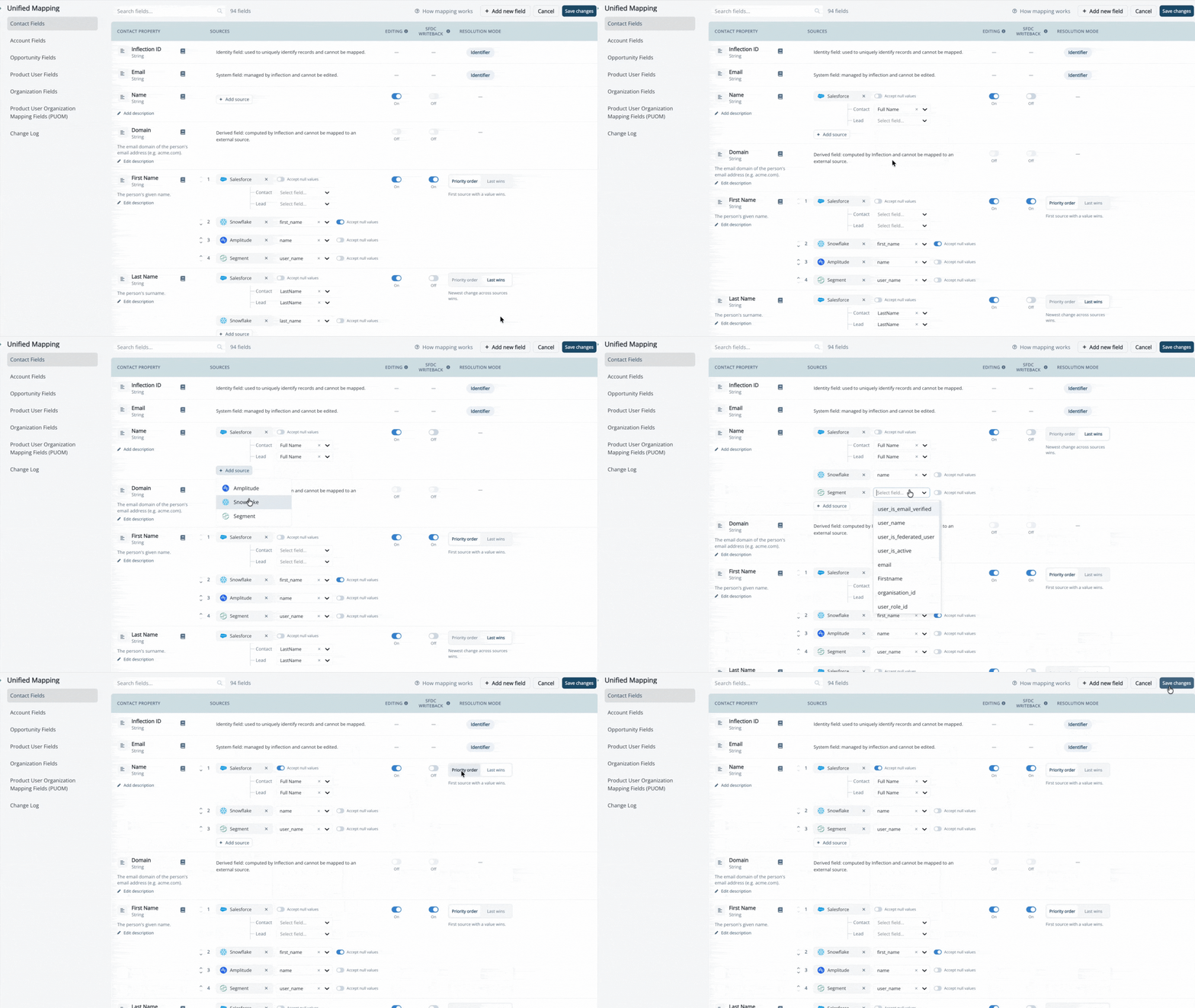 That's more than field mapping. It's identity resolution: reconciling records for the same person or account across systems that were never built to agree with each other, then enriching the result until it's one record worth acting on.
Priority order is now a waterfall
When a field has more than one source, you choose how the conflict resolves.
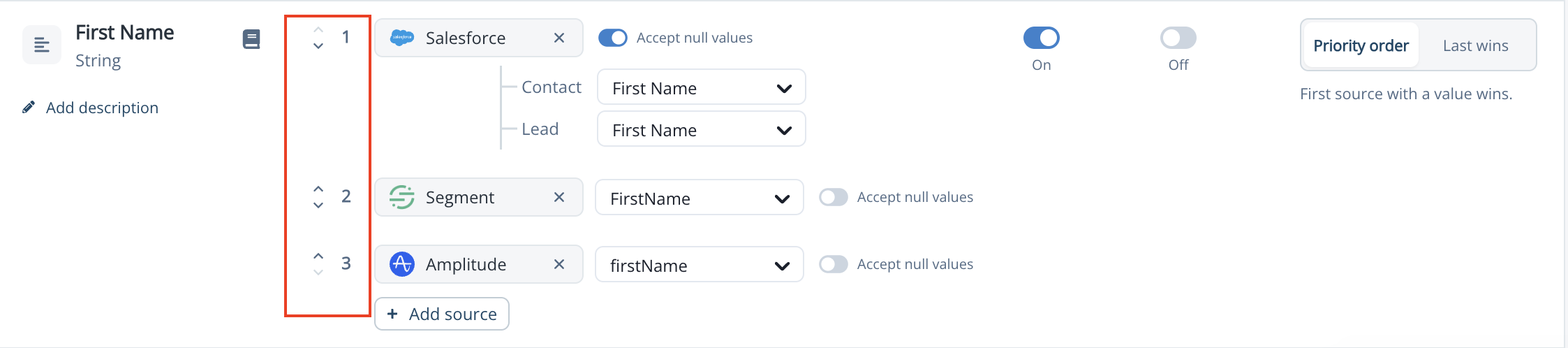 Waterfall: rank your sources. The first one with a value wins; if it's blank, Inflection falls through to the next. Order Salesforce, warehouse, and product data however your business actually works: Salesforce first with product data as backup, or warehouse first if that's your real system of record.
Last wins: the most recent update across every source wins, regardless of rank. Use it when freshness matters more than hierarchy.
Regardless of what you choose, the unified data can easily be sent back into Salesforce.
Built for humans and agents reading your data
Every field can now carry a description. That's not just for internal documentation. Inflection's agents read those descriptions to understand what a field actually represents before it builds a segment, writes a journey, or personalizes an email. A well-described field is how an agent understands your data model without you explaining it in a prompt every time.
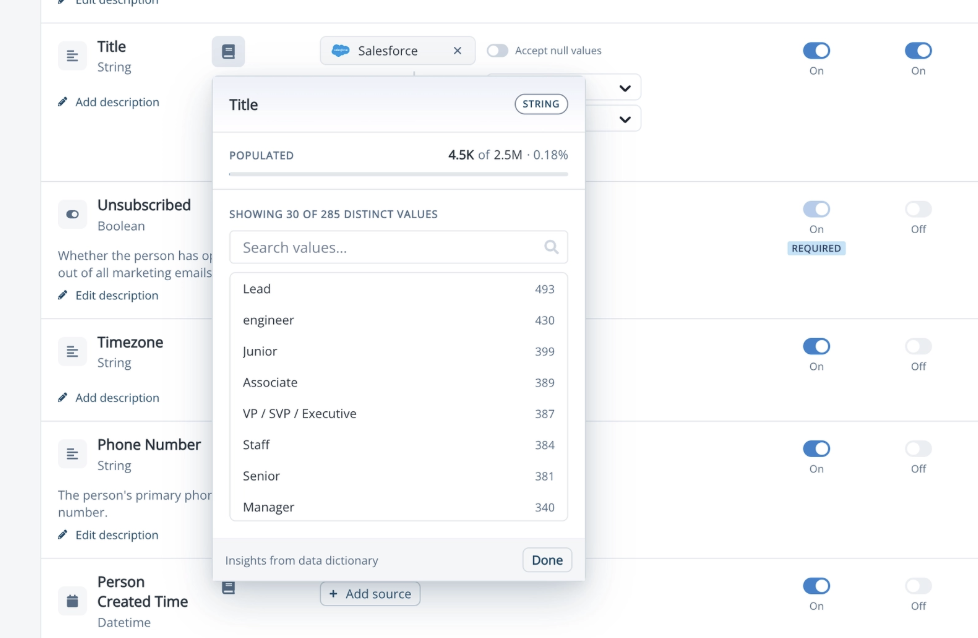 Additionally, you can easily see the distinction values and what data is populated to help you map with confidence.
None of this requires ripping out your stack. Unified Mapping sits on top of the systems you already run: Salesforce, your warehouse, Segment, Amplitude. You decide once, per field, how they resolve when they disagree, and Inflection holds to it.